
.svg)

.svg)

Austin Water Restrictions 2026: How Xeriscaping Keeps Your Yard Alive on One Watering Day
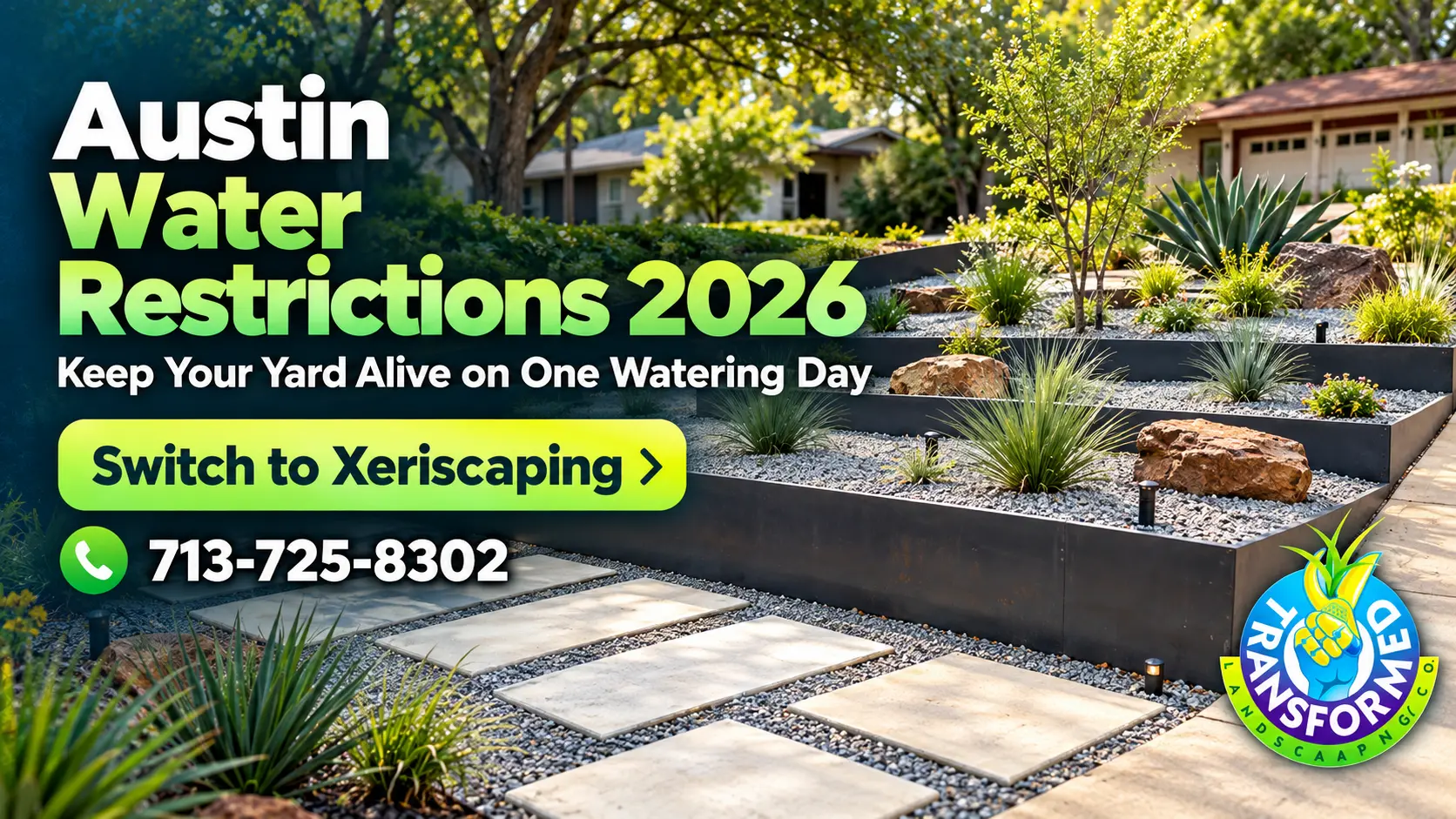
Keeping a green, attractive yard in Central Texas can feel challenging when summer heat arrives and outdoor watering is limited. The good news is that Austin water restrictions landscaping rules do not mean your property has to look dry, empty, or neglected.
The key is designing a landscape that needs less supplemental water in the first place.
As of 2026, Austin remains under Conservation Stage Water Use Restrictions. Residential automatic and manual irrigation systems are limited to one designated watering day per week, while hose-end sprinklers and drip irrigation are allowed on two designated days.
For homeowners ready to reduce lawn dependency, xeriscaping offers a practical way to create an attractive outdoor space that works better with Austin's climate and watering rules.
Transformed Landscaping helps Austin homeowners create landscapes that balance water efficiency, thoughtful planting, outdoor function, and strong visual design.
What Are Austin's Watering Restrictions in 2026?
Austin Water's current Conservation Stage sets different schedules depending on the irrigation method.
For residential properties:
- Automatic and manual irrigation systems can run one day per week.
- Even-numbered addresses water on Thursday.
- Odd-numbered addresses water on Wednesday.
- Irrigation is permitted from midnight to 10 a.m. and from 7 p.m. to midnight.
- Hose-end sprinklers and drip irrigation may be used twice per week.
- Even addresses can use hose-end or drip irrigation on Thursday and Sunday.
- Odd addresses can use them on Wednesday and Saturday.
Austin Water also states that hand-held watering and tree bubblers are allowed at any time under the current Conservation Stage.
Why the One-Day Rule Matters for Traditional Lawns
Conventional lawns can demand significant supplemental irrigation during hot, dry periods.
When an automatic sprinkler system only has one scheduled day, homeowners sometimes respond by running irrigation for too long. That can cause runoff, oversaturated areas, wasted water, and higher utility bills without necessarily creating healthier turf.
A drought-tolerant yard takes a different approach. Instead of trying to make every square foot depend on regular sprinkler coverage, the landscape is designed around plants and materials that can handle longer periods between watering.
How Xeriscaping Works With Austin Water Restrictions
Xeriscaping is not simply removing grass and replacing it with gravel.
A well-designed xeriscape combines climate-appropriate plants, efficient irrigation, healthy soil, mulch, functional pathways, and carefully selected hardscape.
For homeowners researching xeriscaping water restrictions in Austin, the biggest advantage is reduced dependence on frequent watering once plants are established.
Reduce the Amount of High-Water Turf
You do not necessarily need to eliminate every section of grass.
Instead, consider keeping turf only where it serves a real purpose, such as:
- Children's play areas
- Pet-friendly spaces
- Small recreational lawns
- Open gathering areas
- Visual transitions near patios
Less functional lawn areas can become native planting beds, mulched zones, pathways, or outdoor living spaces.
A custom landscape design can determine which areas benefit from turf and which areas could perform better with low-water planting.
Choose Plants Suited to Central Texas
Plant selection makes a major difference in how a landscape handles Austin heat.
A drought-tolerant yard should prioritize plants suited to local sun exposure, soil, drainage, and available irrigation. Native and well-adapted species generally make more sense than plants requiring frequent supplemental watering to survive summer conditions.
Homeowners can explore Texas native planting to create planting areas with seasonal color, texture, and a stronger connection to the Central Texas landscape.
Remember That Drought-Tolerant Does Not Mean No Water
Even water-wise plants need consistent moisture while their root systems become established.
The goal is not to stop watering immediately after installation. It is to establish plants correctly so their long-term water needs can become lower.
Drought-Tolerant Yard Austin Watering Schedule Tips
A successful drought-tolerant yard and Austin watering schedule should work together rather than compete with each other.
Start by separating plants into irrigation zones based on their water needs.
For example, newly installed plants should not share the same irrigation expectations as established native shrubs or a small turf area.
Use Drip Irrigation in Planting Beds
Drip irrigation applies water closer to plant roots instead of spraying large areas through the air.
Under Austin's current Conservation Stage, residential drip irrigation also has two designated watering days rather than the single day assigned to automatic and manual irrigation systems.
A professionally planned irrigation system can help separate turf, planting beds, trees, and other landscape zones so each receives water more appropriately.
Water Deeply Instead of Constantly
Frequent shallow watering can encourage roots to stay close to the soil surface.
When conditions and plant needs allow, deeper watering helps moisture reach farther into the root zone. Austin Water also recommends checking soil moisture before watering rather than assuming the landscape needs irrigation simply because a scheduled watering day has arrived.
Use Mulch to Protect Soil Moisture
Mulch is one of the simplest tools for a water-conscious landscape.
Austin Water recommends adding approximately two to four inches of organic mulch around trees and plants to help retain moisture and reduce weeds.
Mulch can also improve the finished appearance of planting beds and reduce exposed soil during Austin's hottest months.
Landscaping Options for Water Restricted Areas
The best landscaping options for water restricted areas do more than survive drought. They create a property that still feels complete and inviting.
Native and Adapted Plant Beds
Replacing large turf sections with layered planting can provide color, movement, privacy, and visual interest without treating the entire yard like a lawn.
Plant combinations should account for:
- Mature size
- Sun and shade
- Soil conditions
- Seasonal interest
- Drainage
- Water requirements
Hardscape and Outdoor Living Areas
Patios, walkways, seating areas, stonework, and gathering spaces can reduce the amount of irrigated ground while making a property more useful.
Professional hardscaping can connect these areas to planting zones so the yard still feels balanced rather than covered in pavement.
Smaller, More Purposeful Lawn Areas
For many homeowners, the answer is not "no lawn." It is "less lawn."
A smaller lawn surrounded by native plants, shade trees, paths, and outdoor living areas can provide the green space a family wants without forcing the entire property to depend on frequent irrigation.
Can New Xeriscaping Get Extra Water While Plants Establish?
Austin Water recognizes that some newly installed xeriscapes require additional watering during establishment.
A New Xeriscape Landscape watering variance may be available in qualifying situations. Variances are evaluated case by case, and homeowners must continue following existing restrictions until approval is granted. Austin Water also requires qualifying plants to meet specific low-water or xeric standards.
This is important when planning a major installation during warmer months.
Plan Before Installation Begins
Before changing the landscape, consider:
- Which existing lawn areas are worth keeping?
- Where does water currently collect or run off?
- Which parts of the property receive full afternoon sun?
- Which plants can handle the site's actual conditions?
- Does the irrigation system need new zones or drip conversion?
- Could installation timing affect plant establishment?
Thoughtful planning can prevent expensive changes after planting begins.
Why Xeriscaping Is About Design, Not Just Water Savings
Water efficiency matters, but homeowners still want a landscape that looks finished.
A poorly planned xeriscape can feel sparse or disconnected. A well-designed one can include layered plants, defined pathways, stone, outdoor seating, accent features, and carefully preserved lawn areas.
The goal of Austin water restrictions landscaping is not simply to use less water. It is to create a property that remains functional and visually appealing while becoming less dependent on frequent irrigation.
Transformed Landscaping approaches xeriscaping in Austin as a complete design opportunity rather than a simple grass-removal project.
You can also view completed landscaping projects to see how thoughtful planting and outdoor construction can transform a property.
Build a Yard That Works With Austin's Climate
Water restrictions may change over time, but Austin's hot summers make water-conscious landscaping valuable even when reservoirs are healthy.
Creating a drought-tolerant yard gives homeowners more flexibility when watering schedules tighten while reducing the need to constantly fight local growing conditions.
Transformed Landscaping combines landscape planning, planting, irrigation, and installation to create outdoor spaces designed around each property.
Homeowners researching the company can also view Transformed Landscaping's Austin reviews and local profile.
Ready to explore landscaping options for water restricted areas around your home? Contact Transformed Landscaping to discuss your yard, design goals, and water-wise landscaping options.
FAQs About Austin Water Restrictions and Landscaping
How often can I run my sprinkler system in Austin in 2026?
Under Austin's current Conservation Stage, residential automatic and manual irrigation systems are limited to one designated day per week. Even-numbered addresses water on Thursday, while odd-numbered addresses water on Wednesday.
Can I use drip irrigation more than once a week?
Yes. Under the current residential Conservation Stage schedule, drip irrigation is allowed on two designated days per week. Even addresses have Thursday and Sunday, while odd addresses have Wednesday and Saturday.
Is xeriscaping exempt from Austin water restrictions?
Not automatically. Established xeriscapes still need to follow applicable watering rules. Certain qualifying newly installed xeriscapes may apply for a watering variance, but approval is handled case by case.
What are good landscaping options for water restricted areas?
Native and adapted planting beds, reduced turf areas, efficient drip irrigation, mulch, shade trees, permeable pathways, and functional hardscaping can all help create a landscape that relies less on frequent supplemental watering.
Does a drought-tolerant yard still need irrigation?
Yes. New plants need water while becoming established, and even mature drought-tolerant plants may occasionally require supplemental irrigation during prolonged dry conditions. The difference is that a properly established water-wise landscape should generally be less dependent on frequent watering than a traditional high-water landscape.
Can Transformed Landscaping redesign a lawn for Austin watering restrictions?
Yes. Transformed Landscaping provides landscape design, xeriscaping, native planting, irrigation, hardscaping, and other services that can be coordinated into a more water-conscious outdoor plan. Homeowners can contact the Transformed Landscaping team to discuss their property and goals.


.svg)