
.svg)

.svg)

Austin Water Rebate for Xeriscaping: How to Get Up to $3,000 for Your Yard
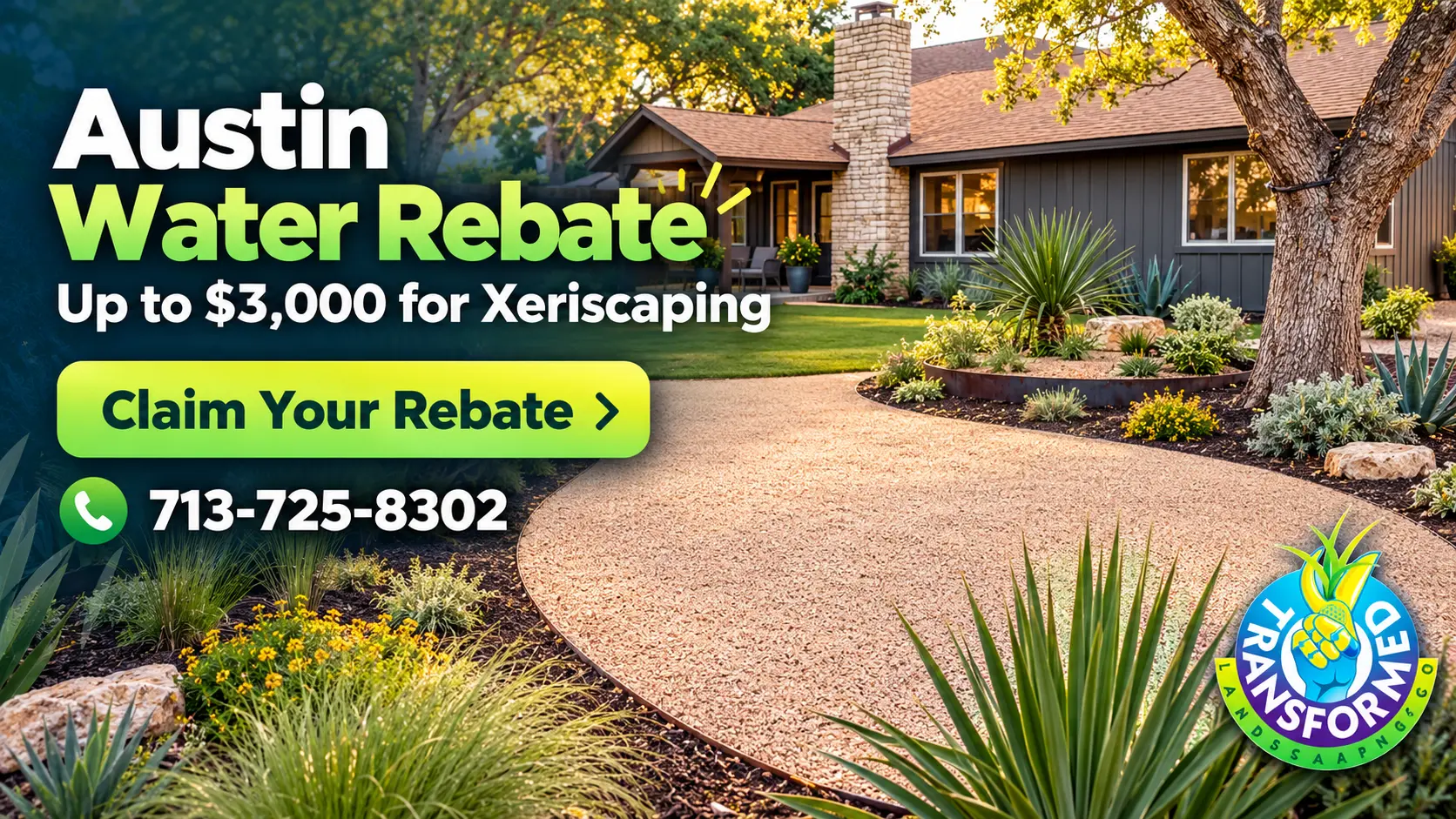
Replacing thirsty lawn areas with a water-wise landscape can make an Austin yard easier to maintain, more resilient in summer, and more attractive. It may also offset part of the project cost through the Austin Water xeriscape rebate, officially called the WaterWise Landscape Rebate.
Austin Water currently lists a residential rebate of up to $3,000 for converting turf grass to native plant beds. Recent City materials describe the incentive as $100 per 100 square feet, with a 200-square-foot minimum conversion area. Because program requirements can change, homeowners should confirm the current rules and receive approval before starting work.
Transformed Landscaping can help homeowners turn those requirements into a cohesive outdoor design that still looks polished, functional, and intentional.
What Is the Austin Water Xeriscape Rebate?
The WaterWise Landscape Rebate is intended to reduce outdoor water use by replacing qualifying turf with native or adapted planting areas. It is not simply a payment for removing grass. The finished landscape needs to meet Austin Water’s conservation and planting requirements.
For Austin homeowners already considering less turf, this program can support a landscape that combines climate-appropriate plants, mulch, efficient irrigation, pathways, and thoughtfully selected hardscape.
Austin Water also allows customers of certain qualifying water providers to participate. The City of Rollingwood and City of Westlake Hills are currently included on that list, making the program relevant to homeowners beyond properties directly served by Austin Water.
Is This a Turf Replacement Rebate in Austin TX?
In practical terms, yes. Homeowners often search for a turf replacement rebate in Austin TX when they want financial help converting lawn into a lower-water landscape.
Austin Water uses the WaterWise Landscape name because the program focuses on what replaces the turf, not grass removal alone. Simply swapping one turf variety for another does not achieve the same objective as creating a planted, water-efficient landscape.
How Much Could You Receive?
Recent Austin Water materials describe the program at $100 for every 100 square feet of qualifying turf converted, up to the $3,000 residential maximum.
Planning examples include:
- 200 sq. ft. converted: about $200
- 500 sq. ft. converted: about $500
- 1,000 sq. ft. converted: about $1,000
- 2,000 sq. ft. converted: about $2,000
- 3,000 sq. ft. converted: up to $3,000
Final eligibility and payment are determined by Austin Water, so these figures should be treated as planning examples rather than guaranteed rebate amounts.
Why Planning the Whole Yard First Matters
A rebate-friendly yard still needs to work well after the incentive is paid. Consider drainage, shade, circulation, mature plant size, irrigation zones, views from the home, and the amount of open space your household actually uses.
A professional landscape design can coordinate these elements before installation begins, helping the finished space feel intentional rather than like unrelated plants added simply to meet rebate requirements.
Key WaterWise Landscape Rebate Requirements
Austin Water requires qualifying conversion areas to contain healthy existing turf. Its online guidance notes that dead lawns do not qualify, and thinning or dormant grass may need additional evaluation. Most importantly, work started before Austin Water approval will not qualify for the rebate.
The project also needs to follow requirements involving plant selection, mature coverage, irrigation, and allowed landscape materials.
Choose Native or Adapted Plants
Native and adapted plants are central to WaterWise landscaping because they can perform well under Central Texas conditions while reducing dependence on frequent supplemental watering once established.
They can also add seasonal flowers, grasses, texture, wildlife value, and stronger regional character.
Homeowners interested in building that type of plant palette can explore Texas native planting for a landscape designed around Austin conditions.
Plan for Mature Plant Coverage
Austin Water requires more than 50% plant coverage once plants reach mature size. The calculation is based on how wide plants are expected to grow, not how small they look on installation day.
Avoid Overcrowding Young Plants
Adding too many plants for immediate fullness can create competition and extra maintenance later. Proper spacing gives shrubs, grasses, perennials, and groundcovers room to mature while allowing the landscape to develop naturally.
Update Irrigation Where Needed
Traditional turf spray heads are not the most efficient choice for many native planting beds. Austin Water advises converting irrigation in the newly planted area to drip if the existing system is not being capped.
If the landscape conversion affects existing watering zones, professional irrigation services can help integrate the new planting plan with a more appropriate watering method.
What Does Not Qualify?
Not every low-water yard automatically qualifies for the WaterWise landscape rebate in Austin.
Austin Water states that artificial turf and permeable concrete are not eligible in the conversion area. Water features are also excluded. Residential projects may incorporate limited gravel features, including paths up to three feet wide and gravel or stone patios up to 200 square feet.
The practical approach is to make living plant material the focus while using gravel, edging, stone, and other hardscape to support the overall design where permitted.
Homeowners planning a broader outdoor transformation can review Transformed Landscaping’s landscaping services and hardscaping services.
How to Apply for the WaterWise Landscape Rebate in Austin
Step 1: Confirm Your Water Provider
Eligibility is based on the water provider serving the property, not simply whether the address is located in the greater Austin area.
Check your provider against Austin Water’s current eligibility information before planning around the rebate.
Step 2: Measure the Turf Area
Measure the specific section of lawn you want to convert. Confirm that the existing turf condition meets current requirements and that the planned conversion reaches the program’s current minimum area.
Step 3: Create a Rebate-Compatible Landscape Plan
Select native or adapted plants, calculate mature plant coverage, determine mulch and pathway areas, and decide how existing irrigation will be modified.
Transformed Landscaping offers xeriscaping in Austin with attention to planting, layout, materials, water use, and everyday outdoor living.
Step 4: Apply Before Starting Work
This is one of the most important steps.
Austin Water clearly states that work started before approval does not qualify. Do not begin turf removal or landscape installation until the required application and approval process has been completed.
Step 5: Follow the Approved Installation Rules
Austin Water limits plant installation to approved spring and fall planting periods because cooler conditions give new plants a better opportunity to establish. Follow the approved plan and complete any required post-project verification.
Why Xeriscaping Can Be Worth It Beyond the Rebate
A WaterWise landscape rebate in Austin can help reduce the initial project cost, but the bigger opportunity is creating a yard that better fits Central Texas.
A thoughtful xeriscape can:
- Reduce dependence on frequent lawn irrigation
- Add native color and seasonal interest
- Reduce the amount of turf that needs mowing
- Create better transitions between patios, paths, and planting beds
- Make outdoor spaces feel more connected to Austin’s natural character
Austin Water estimates that converting a 500-square-foot turf area to a mature native bed could save up to 930 gallons of water per month, depending on previous watering habits and site conditions.
Turn the Rebate Into a Better Landscape
The Austin Water xeriscape rebate is most valuable when it supports a landscape you will enjoy long after the rebate process is complete.
Instead of treating the program as a reason to simply remove grass, use it as an opportunity to rethink how the yard looks, functions, and responds to Austin’s climate.
Transformed Landscaping creates custom outdoor spaces for Austin-area homeowners who value thoughtful planning and professional installation. View completed landscape projects, learn more about Transformed Landscaping, or visit the company’s Google reviews and local profile.
Ready to explore a more water-wise landscape? Contact Transformed Landscaping to discuss your property, design priorities, and xeriscaping goals.
FAQs About the Austin Water Xeriscape Rebate
How much is the Austin Water xeriscape rebate?
Austin Water currently lists the residential WaterWise Landscape Rebate at up to $3,000. Recent City materials describe the incentive as $100 for every 100 square feet of qualifying turf converted.
What is the minimum area for the WaterWise landscape rebate in Austin?
Recent Austin Water materials use a 200-square-foot minimum for residential WaterWise landscape conversions. Because program requirements have changed over time, confirm the current application criteria before beginning your project.
Can I replace grass with artificial turf and receive the rebate?
No. Austin Water’s current WaterWise guidance states that artificial turf is not eligible for the rebate.
Do I need approval before removing my lawn?
Yes. Austin Water states that work begun before approval will not qualify. Complete the required application process before turf removal or installation begins.
Can homeowners in Rollingwood or Westlake Hills qualify?
Potentially. Austin Water currently lists both the City of Rollingwood and City of Westlake Hills among qualifying water providers. Final eligibility still depends on the property, water account, proposed project, and current program requirements.
Is xeriscaping the same as covering a yard with rocks?
No. Well-designed xeriscaping combines climate-appropriate plants, healthy soil, mulch, efficient irrigation, and carefully selected hardscape. The goal is a living, attractive landscape that uses water more thoughtfully, not an empty gravel yard.


.svg)