
.svg)

.svg)

How to Landscape a Sloped Yard Without Constant Problems
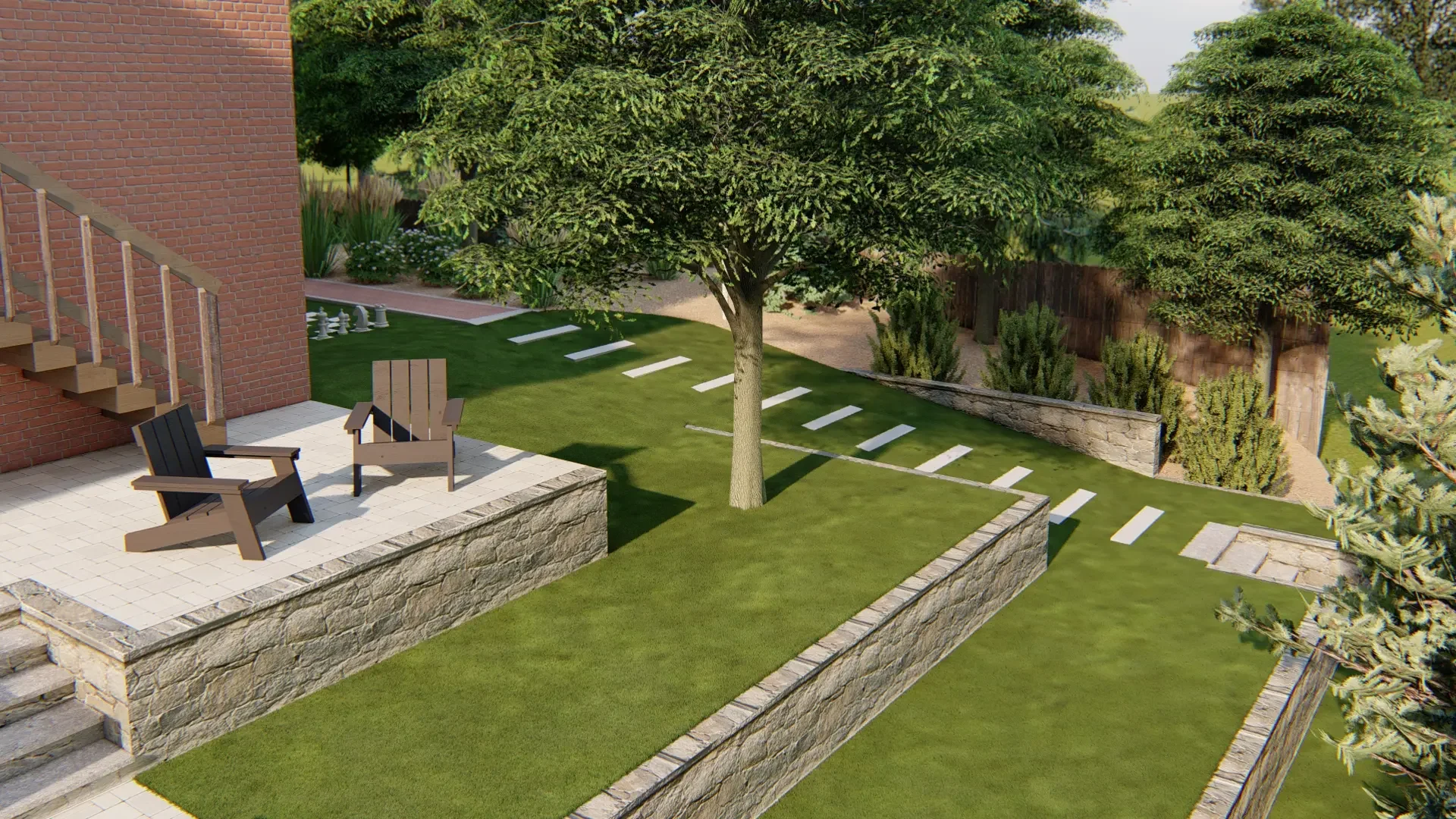
Sloped yards are one of the most challenging landscape conditions for homeowners. Many people search for landscaping solutions for sloped yards after dealing with erosion, pooling water, or areas that are simply unusable. While slopes create design challenges, they also offer opportunities for unique, functional landscapes—when planned correctly.
The key is working with the slope, not fighting it.
Why Sloped Yards Often Become Problem Areas
Gravity affects everything—soil, water, and plants. Without proper planning, slopes quickly turn into maintenance headaches.
Common slope issues include:
- Soil erosion
- Water runoff
- Uneven plant growth
Ignoring slope dynamics leads to repeated repairs.
Understanding the Degree of the Slope
Not all slopes are the same. Gentle slopes require different solutions than steep elevation changes.
Slope evaluation considers:
- Angle and length
- Soil type
- Drainage patterns
Correct assessment guides the solution.
Using Terracing to Create Usable Space
Terracing breaks a slope into manageable, level sections.
Terrace benefits include:
- Reduced erosion
- Improved planting conditions
- Increased usable space
Terraces transform problem areas into assets.
When Retaining Walls Are Necessary
Some slopes require structural support to remain stable.
Retaining walls help:
- Hold back soil
- Create level areas
- Manage water pressure
They should be designed, not improvised.
Planting Strategies That Stabilize Slopes
Plant selection plays a major role in slope stability.
Slope-friendly planting includes:
- Deep-rooted plants
- Ground covers that spread
- Plants matched to sun exposure
Roots help hold soil in place.
Reducing Lawn on Slopes
Lawns struggle on slopes and require constant upkeep.
Replacing turf with:
- Planting beds
- Ground cover
- Hardscaping
Reduces erosion and maintenance.
Managing Water Flow on Sloped Properties
Water accelerates downhill. Without control, it damages everything in its path.
Smart water management includes:
- Drainage channels
- Controlled runoff paths
- Proper grading
Water should be guided—not allowed to roam.
Creating Visual Flow Instead of Fighting the Grade
Good design embraces elevation changes instead of hiding them.
Design techniques include:
- Stepped walkways
- Layered planting
- Level transitions
Flow improves both function and aesthetics.
Safety Considerations on Slopes
Steep slopes can be hazardous without proper design.
Safety improvements include:
- Defined walkways
- Steps or handrails
- Clear boundaries
Safety should be built into the design.
Why DIY Solutions Often Fail on Slopes
Slopes magnify small mistakes. Poor solutions often lead to repeated failures.
Common DIY issues include:
- Inadequate drainage
- Insufficient structural support
- Plant failure
Professional planning prevents costly fixes.
Why Professional Design Is Essential for Sloped Yards
Professionals understand soil behavior, water movement, and structural requirements.
Expert design:
- Stabilizes the slope
- Improves usability
- Delivers long-term performance
Slopes require strategy, not shortcuts.


.svg)