


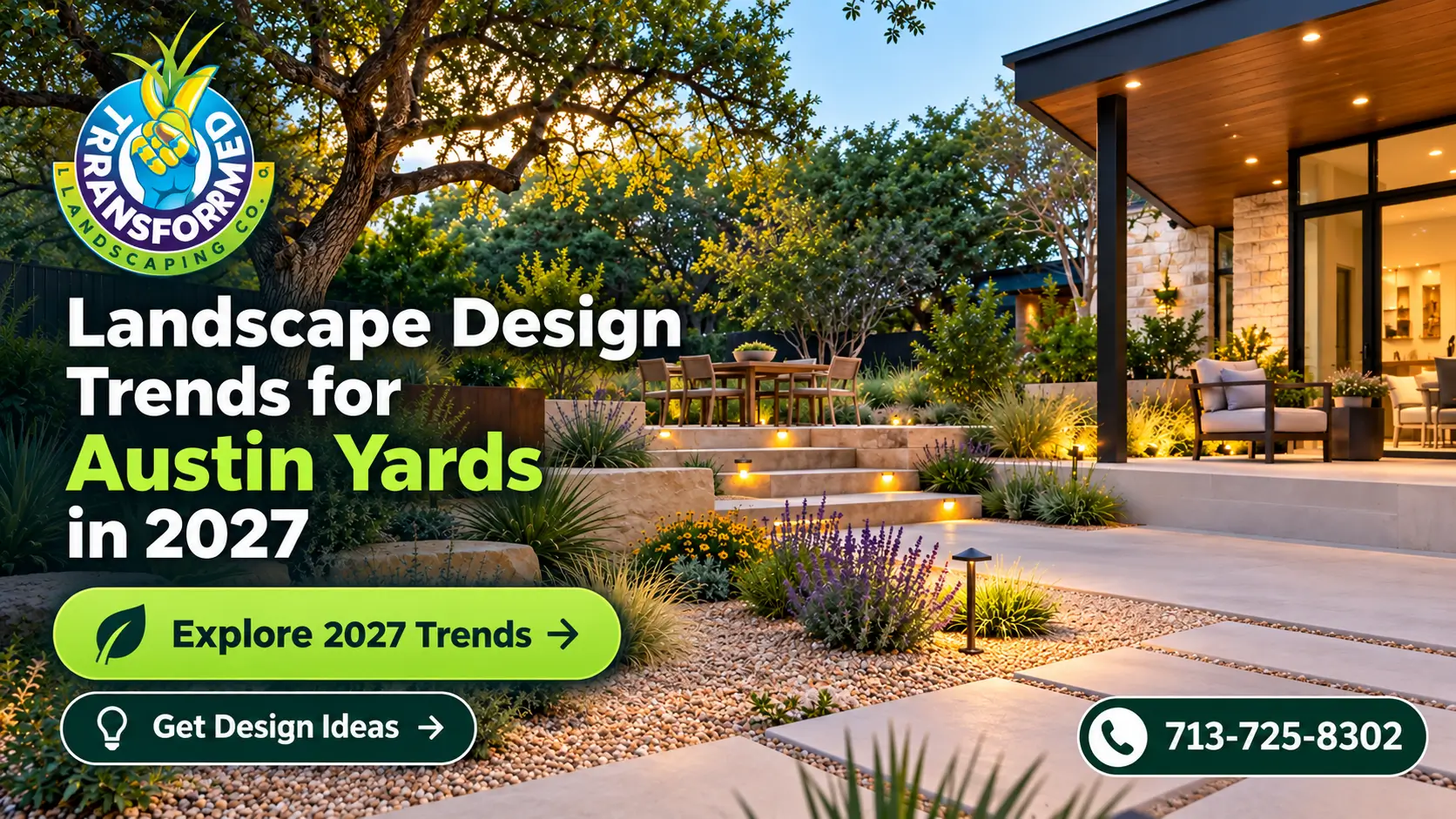
Landscape Design Trends for Austin Yards in 2027
Austin homeowners are asking more from their outdoor spaces. A beautiful yard is no longer enough. People increasingly want landscapes that handle Texas heat, use water more thoughtfully, provide comfortable places to gather, and require less unnecessary upkeep.
That shift is shaping the landscape design trends 2027 is likely to bring into Austin neighborhoods.
Current 2026 research already shows strong homeowner interest in outdoor living zones, low-maintenance planting, native landscapes, drought-resistant plants, and more functional backyards. Houzz reports that 83% of surveyed homeowners renovating outdoor spaces included a lounge or seating area, while native, pollinator-friendly, and drought-resistant plants also gained significant attention.
For Austin, those national trends meet a very local reality: hot summers, water conservation, Hill Country terrain, and a growing preference for landscapes that feel connected to Central Texas.
Transformed Landscaping helps homeowners bring those priorities together through custom landscape design, planting, irrigation, hardscape, and outdoor construction.
1. Native-Looking Landscapes Will Feel More Designed
Native planting is not new, but the way homeowners use native plants is changing.
Instead of treating them as a separate "wildflower corner," expect more professionally designed landscapes to integrate native and adapted plants throughout the entire yard.
Austin's Grow Green program already promotes native and adapted plants that are naturally drought tolerant and resistant to many pests and diseases.
Structured Native Planting Will Lead the Look
One of the most useful current trends in landscape design is combining ecological planting with clear visual structure.
That can include:
- Repeating ornamental grasses
- Layering flowering perennials
- Using evergreen shrubs for structure
- Creating defined bed edges
- Mixing native plants with architectural hardscape
- Preserving mature trees as focal points
This approach gives homeowners the environmental benefits of native planting without making the yard feel uncontrolled.
Homeowners interested in a Central Texas plant palette can explore Texas native planting from Transformed Landscaping.
2. Traditional Lawns Will Become More Purposeful
Large lawns are unlikely to disappear completely in Austin. Instead, homeowners will become more selective about where turf belongs.
The lawn of 2027 may be smaller, but it will have a reason for being there.
Turf Will Be Reserved for Useful Spaces
Grass may remain around:
- Children's play areas
- Pet spaces
- Recreation zones
- Small formal lawns
- Open gathering areas
Hard-to-irrigate strips, sunny slopes, unused corners, and decorative lawn areas may increasingly become planting beds, paths, patios, or drought-tolerant landscape zones.
This direction fits broader homeowner behavior. Houzz's 2026 study found growing interest in lower-maintenance landscaping, native plants, and drought-resistant choices.
For Austin homeowners, xeriscaping can help reduce unnecessary turf without giving up color or curb appeal.
3. Outdoor Rooms Will Become More Complete
Some of the best outdoor living design trends are moving beyond a patio with a table and a few chairs.
Outdoor spaces are increasingly designed as true extensions of the home.
Houzz's 2026 research found homeowners creating separate areas for lounging, dining, cooking, gardening, and quiet relaxation.
Austin Backyards Will Have Multiple Zones
A single yard might contain:
- A shaded lounge
- An outdoor dining area
- A grilling or cooking zone
- A pool terrace
- A small lawn
- A garden retreat
- A fire feature
- A pathway connecting each space
The key is making these areas feel connected rather than placing unrelated features around the property.
Circulation Will Matter as Much as the Features
A great outdoor kitchen loses some value if guests have to cross wet lawn to reach it.
Paths, steps, planting, lighting, and sightlines should connect each outdoor room naturally.
Professional landscape design can establish that circulation before construction begins.
4. Shade Will Become a Major Design Feature
One of the most practical Austin landscaping trends for 2027 will be designing specifically for summer comfort.
Austin homeowners already know that a beautiful patio receiving full afternoon sun may not be comfortable when temperatures rise.
Expect More Built and Natural Shade
Designs may increasingly incorporate:
- Mature canopy trees
- Pergolas
- Covered patios
- Shade structures
- Strategically positioned screens
- Layered planting around seating areas
Houzz reports that homeowners are investing more heavily in outdoor structures and improvements that make exterior spaces comfortable and usable for longer periods.
The best solution will often combine architecture and planting rather than relying on only one source of shade.
5. Water-Conscious Design Will Become Standard
Among outdoor design trends in Texas, water efficiency is likely to move from an optional sustainability feature to a basic design consideration.
As of September 2026, Austin remains under Conservation Stage water-use restrictions. Austin Water also states that once-weekly watering instead of two or three times per week can substantially reduce household water use.
Irrigation Will Be Designed by Zone
A modern landscape should not treat every planting area the same way.
Native beds, lawn, trees, containers, and newly installed plants can have very different watering needs.
Professional irrigation services can help divide the landscape into practical zones and match irrigation methods to each area.
Plant Selection Will Do More of the Work
Smart irrigation alone cannot make a poorly selected plant palette water efficient.
The stronger trend is designing with plants suited to local sun, soil, drainage, and climate so the landscape becomes less dependent on constant intervention once established.
6. Permeable and Natural-Looking Hardscape Will Grow
Hardscape is becoming more important as homeowners create functional outdoor rooms, but the trend is shifting toward materials that feel integrated with the landscape.
Houzz reported a 137% increase in searches for "permeable patio" in its 2026 emerging-trends data.
Materials Will Feel More Connected to the Site
For Austin yards, that may include:
- Natural stone
- Gravel paths
- Large-format pavers
- Permeable surfaces
- Stepping stones
- Stone retaining features
- Simple concrete forms paired with softer planting
Professional hardscaping can combine these surfaces with grading, planting, and circulation rather than treating patios and walkways as isolated construction projects.
7. Naturalistic Planting Will Replace Overly Formal Beds
Perfect rows of identical shrubs will still suit some architecture, but current trends in landscape design are moving toward landscapes with more movement and seasonal change.
Houzz's coverage of major 2026 garden design trends also pointed toward relaxed naturalistic planting that balances wildlife value with usable residential space.
The Goal Is Controlled Naturalism
That does not mean letting plants grow without structure.
A successful naturalistic garden can use:
- Repeating plant groups
- Contrasting leaf shapes
- Ornamental grasses
- Seasonal flowering plants
- Groundcovers
- Structural shrubs
- Defined pathways and edges
The result can feel softer and more connected to nature while still clearly looking professionally designed.
8. Front Yards Will Become More Functional
For years, many homeowners invested heavily in backyards while leaving front yards relatively conventional.
That balance is changing.
Houzz recorded growing search interest in small front yards and compact outdoor spaces during 2026.
Curb Appeal Can Also Create Usable Space
A redesigned front yard might include a small seating terrace, widened entry path, layered native planting, low-water beds, or stronger connections between the driveway and front door.
For properties in neighborhoods such as West Lake Hills, Rollingwood, Tarrytown, Barton Hills, and Pemberton Heights, the front landscape can also provide a stronger connection between the architecture and the street.
9. Custom Details Will Give Landscapes More Personality
As homeowners treat outdoor areas like interior rooms, generic landscapes may feel less satisfying.
Expect more projects to include custom elements that make the property distinctive.
These can include:
- Built-in benches
- Custom planters
- Decorative privacy screens
- Steel edging
- Integrated lighting
- Garden structures
- Custom gates
- Wood details
Transformed Landscaping's services also include custom carpentry and custom metalwork, allowing these elements to become part of the overall landscape rather than afterthoughts.
What Austin Homeowners Should Take From 2027 Trends
The most important landscape design trends 2027 will likely bring are not about chasing a particular plant, paver, or color.
The larger shift is toward landscapes that do more.
Austin homeowners increasingly want yards that:
- Use water thoughtfully
- Provide shade
- Support native plants
- Offer several outdoor activities
- Require sensible maintenance
- Feel connected to the architecture
- Respond to local climate conditions
That makes planning more important than simply adding trendy features.
A landscape should still work years after a specific style falls out of fashion.
Design an Austin Yard for the Way You Actually Live
The strongest Austin landscaping trends for 2027 combine beauty with practical performance.
Native and adapted planting can reduce unnecessary water demand. Outdoor rooms can make the property more useful. Shade can extend the time homeowners spend outside. Thoughtful hardscape can create better movement and gathering spaces.
Transformed Landscaping brings those pieces together through coordinated design and installation.
You can view completed landscape projects for inspiration and visit Transformed Landscaping's Google Business Profile and customer reviews to learn more about the company.
Ready to plan a landscape that feels current without becoming dated? Contact Transformed Landscaping to discuss your Austin property and outdoor goals.
FAQs About Austin Landscape Design Trends for 2027
What are the biggest landscape design trends 2027 is likely to bring?
Based on current 2026 momentum, expect continued interest in native planting, reduced lawn areas, outdoor living rooms, shade structures, permeable hardscape, water-efficient irrigation, naturalistic planting, and multifunctional yards.
What landscaping styles are becoming popular in Austin?
Austin landscapes are increasingly combining modern structure with native and adapted planting. Clean hardscape, ornamental grasses, drought-tolerant plants, mature trees, and defined outdoor living areas can create a contemporary look that still feels appropriate for Central Texas.
Are native plants still a landscape design trend?
Yes, and the interest extends beyond appearance. Native plants can support local habitat and, once established and properly matched to a site, may require less irrigation and maintenance. The American Society of Landscape Architects also highlights their ecological and water-management benefits.
What are the best outdoor living design trends for Austin?
Shaded lounge areas, outdoor dining, cooking spaces, integrated lighting, fire features, poolside gathering areas, and gardens designed as separate but connected zones are among the strongest current directions.
Will xeriscaping still be popular in 2027?
Water-conscious landscaping is likely to remain highly relevant in Austin. The style is also evolving beyond gravel-heavy designs toward layered native planting, purposeful turf reduction, efficient irrigation, mulch, pathways, and attractive outdoor living spaces.
Should I follow every landscaping trend when redesigning my yard?
No. Trends should provide ideas, not dictate the entire design. The best landscape responds first to your property, architecture, lifestyle, maintenance preferences, soil, sunlight, drainage, and budget. A good design can incorporate current ideas without becoming dated when trends change.


