
.svg)

.svg)

What Homeowners Should Plan Before Adding a Pool to Their Landscape
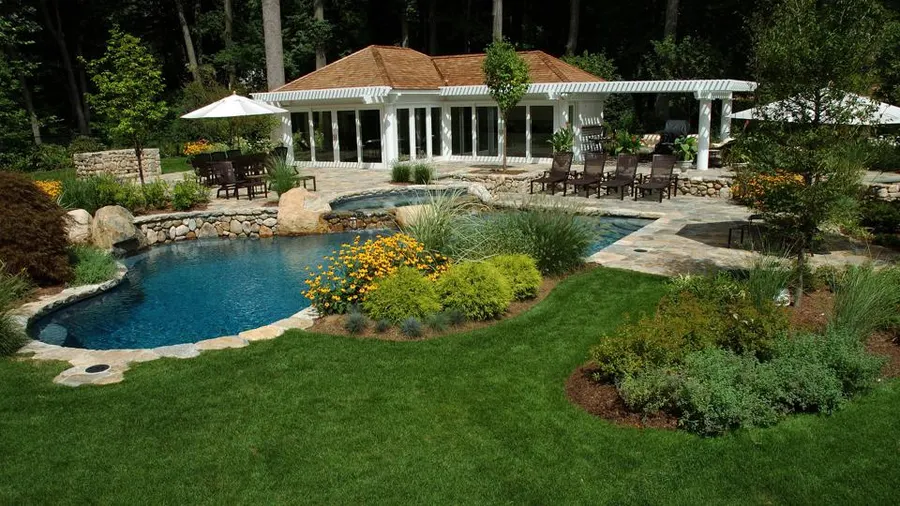
Adding a pool is one of the biggest upgrades a homeowner can make—but many projects fall short because the pool is planned in isolation. Searches for planning a pool with landscape design usually come from homeowners who want more than just a pool in the ground. They want a complete outdoor environment that functions well, looks intentional, and ages gracefully.
A pool should feel like part of the landscape—not dropped into it.
Why Pools Should Never Be Planned Alone
When pools are treated as standalone features, the surrounding space often feels awkward or unfinished.
Common problems include:
- Poor circulation around the pool
- Limited seating or shade
- Disconnected yard areas
The pool affects the entire yard, not just one zone.
Understanding How the Pool Changes Yard Flow
Pools become visual and functional focal points.
Design must account for:
- How people move around the pool
- Entry and exit points
- Connection to the house and other outdoor areas
Flow determines comfort and usability.
Planning Hardscaping Before the Pool Goes In
Hardscaping defines how the pool is used.
Important considerations include:
- Deck size and layout
- Slip-resistant materials
- Transitions between spaces
Hardscaping should support movement and safety.
Why Drainage Planning Is Critical
Pools introduce new water patterns.
Without proper drainage:
- Water pools near the deck
- Soil erosion occurs
- Nearby planting struggles
Drainage should be planned before construction begins.
Thinking About Shade Early
Pools without shade become uncomfortable quickly.
Shade planning may include:
- Pergolas or covered areas
- Tree placement
- Structures that don’t block views
Shade determines how long the space is usable.
Integrating Planting Around a Pool
Not all plants belong near a pool.
Pool-friendly planting should:
- Minimize debris
- Tolerate splashing and heat
- Maintain clean sightlines
Plant selection protects maintenance and appearance.
Defining Pool Zones Beyond Swimming
Pools are used for more than swimming.
Successful designs include zones for:
- Lounging
- Dining
- Relaxation
The surrounding space matters as much as the water.
Considering Privacy Without Blocking Openness
Pools often need privacy—but not enclosure.
Balanced privacy includes:
- Strategic planting
- Partial screens
- Layered design
Privacy should feel natural, not closed in.
Planning Lighting for Evening Use
Pools used only during the day miss half their potential.
Lighting considerations include:
- Safe pathway illumination
- Subtle pool-edge lighting
- Ambient lighting for seating areas
Lighting extends enjoyment.
Why Retrofitting the Landscape Costs More
Adding landscape elements after the pool is built limits options.
Late additions often:
- Feel forced
- Cost more
- Reduce cohesion
Designing together saves time and money.
How a Pool Fits Into a Long-Term Landscape Plan
Even if the pool comes later, it should be planned early.
Long-term planning:
- Preserves space
- Aligns future upgrades
- Prevents redesign
A pool should support the full vision.
Why Professional Planning Makes Pool Projects Successful
Professionals coordinate layout, drainage, and use from the start.
Expert planning:
- Avoids costly mistakes
- Improves usability
- Creates a cohesive outdoor environment
Pools work best when the entire yard is considered.


.svg)