
.svg)

.svg)

What to Do With a Sloped Yard: Smart Landscaping Solutions That Work
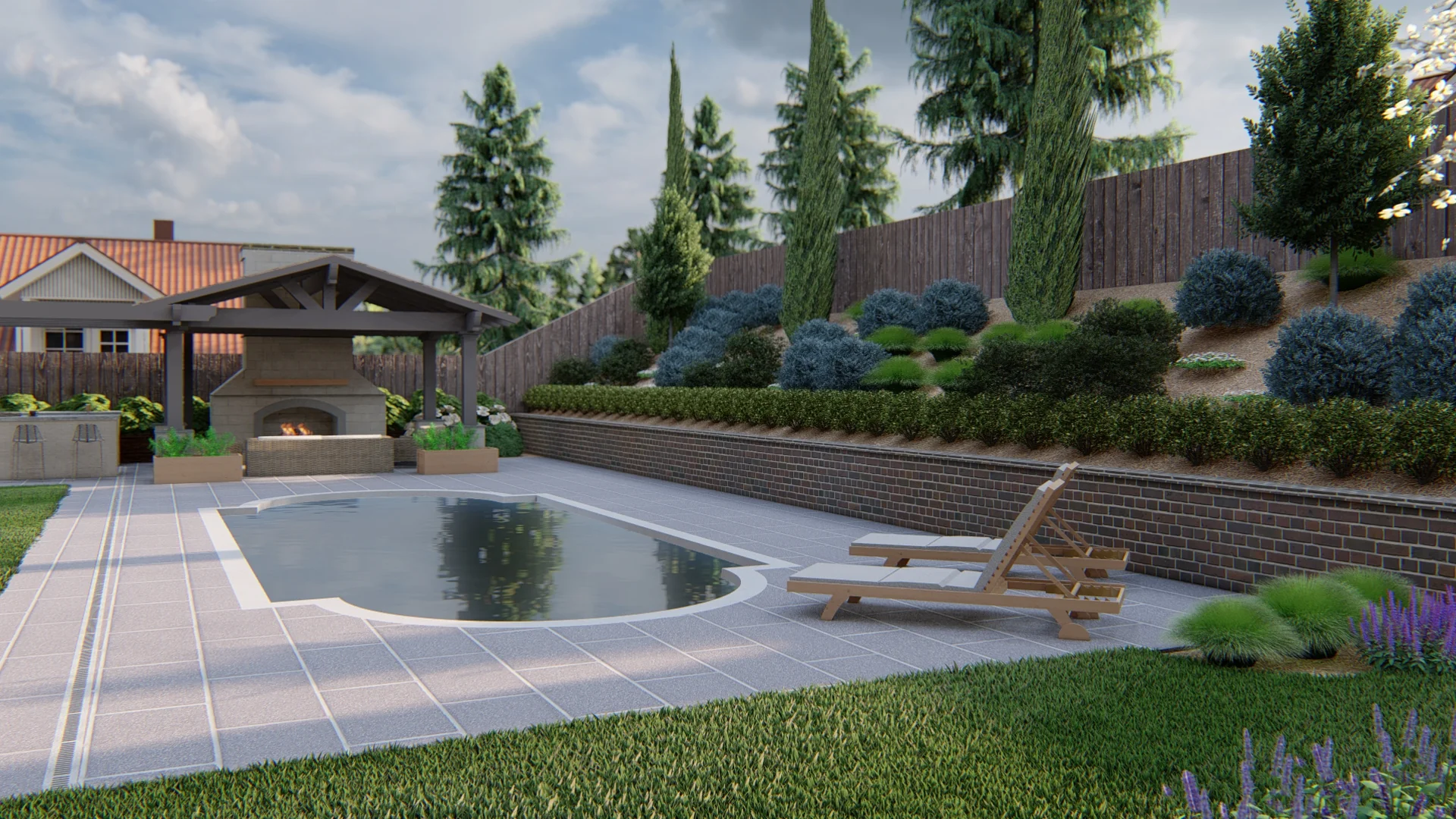
Sloped yards can feel like a limitation—but they’re often full of untapped potential. Homeowners searching for how to landscape a sloped yard are usually dealing with erosion, awkward layouts, or spaces that are difficult to use. While slopes present challenges, they also create opportunities for layered, visually interesting, and highly functional designs when approached correctly.
Slopes don’t need to be flattened—they need to be understood.
Why Sloped Yards Are Often Underutilized
Most homeowners avoid using sloped areas because they feel impractical.
Common issues include:
- Difficult footing
- Poor drainage
- Limited usable space
Without planning, slopes become wasted space.
Understanding the Type of Slope You’re Working With
Not all slopes require the same solution.
Slope types include:
- Gentle slopes that can be shaped
- Moderate slopes that need structure
- Steep slopes that require stabilization
The solution depends on the severity.
Why Grading Is the First Step
Grading reshapes how water and soil move across the yard.
Proper grading:
- Improves drainage
- Creates more usable areas
- Prevents erosion
Every slope solution starts with the ground itself.
When Retaining Walls Make Sense
Retaining walls are essential for managing steep or unstable slopes.
They help:
- Hold soil in place
- Create level terraces
- Prevent long-term shifting
Walls should solve structural problems—not just add design.
Terracing Creates Usable Space
Terracing breaks a slope into multiple flat levels.
Benefits include:
- More functional zones
- Easier movement
- Better planting opportunities
Terraces turn slopes into livable space.
Using Steps and Pathways for Safe Access
Movement on a slope needs to feel secure.
Well-designed steps:
- Improve safety
- Guide traffic naturally
- Reduce wear on the landscape
Access should feel effortless.
Planting for Stability and Erosion Control
Plants play a major role in holding soil in place.
Slope-friendly planting:
- Uses deep-rooted species
- Reduces runoff
- Stabilizes soil over time
Plants reinforce structural solutions.
Why Drainage Is Critical on Slopes
Water moves faster on slopes—and can cause damage quickly.
Without proper drainage:
- Soil washes away
- Plants struggle
- Structures shift
Water control is essential.
Avoiding Common Sloped Yard Mistakes
Many homeowners try to “patch” slope issues.
Common mistakes include:
- Adding loose soil without stabilization
- Ignoring runoff patterns
- Overwatering
Quick fixes rarely last.
Balancing Function and Aesthetics
Sloped yards can look incredible when designed well.
Strong designs:
- Embrace elevation changes
- Use layers for depth
- Create visual interest
Slopes add character when used correctly.
Why Flattening Everything Isn’t Always the Answer
Completely leveling a yard is expensive and often unnecessary.
Flattening can:
- Disrupt natural drainage
- Increase cost significantly
- Remove visual interest
Working with the slope is often better than fighting it.
Why Professional Planning Is Key for Sloped Yards
Slopes involve soil, water, and structural considerations.
Expert planning:
- Prevents erosion and failure
- Maximizes usable space
- Ensures long-term stability
Sloped yards require strategy, not guesswork.


.svg)