
.svg)

.svg)

When to Redesign Your Landscape vs Maintain It
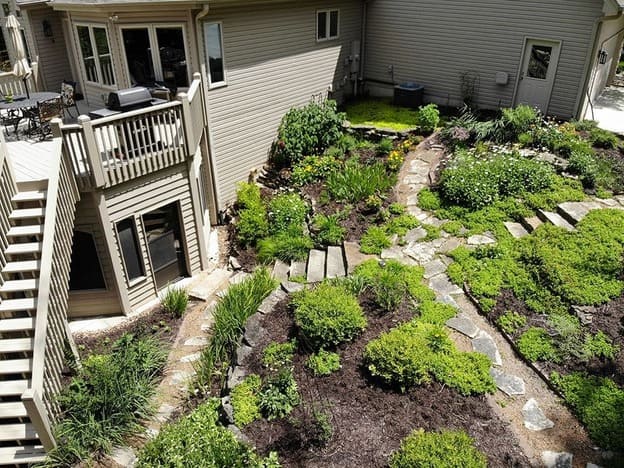
Homeowners often reach a point where their landscape doesn’t look or function the way it used to. The big question becomes whether the space needs ongoing maintenance or a complete landscape redesign. Knowing the difference can save time, money, and frustration.
Both maintenance and redesign play important roles in keeping outdoor spaces healthy and attractive—but they serve very different purposes.
What Landscape Maintenance Is Designed to Do
Landscape maintenance focuses on preserving and caring for an existing landscape. It’s meant to keep plants healthy, lawns tidy, and outdoor spaces looking their best over time.
Maintenance typically includes:
- Lawn mowing and edging
- Pruning and trimming
- Fertilization and soil care
- Seasonal cleanups
- Monitoring plant health
If a landscape is well-designed and functioning properly, maintenance helps extend its lifespan.
Signs Your Landscape Only Needs Maintenance
In many cases, a landscape doesn’t need to be rebuilt—it just needs consistent care. Maintenance may be the right choice if:
- Plants are healthy but overgrown
- Lawns look uneven or untidy
- Garden beds need refreshing
- The layout still works well
- The space functions as intended
Maintenance addresses appearance and health, not structure or layout.
What a Landscape Redesign Involves
A landscape redesign is a deeper process that rethinks how the outdoor space is structured and used. Redesign focuses on layout, flow, plant selection, hardscaping, and long-term performance.
Landscape redesign often includes:
- New layout and spatial planning
- Updated plant selection
- Hardscaping additions or changes
- Irrigation or drainage improvements
- Functional upgrades
Redesign is ideal when the existing landscape no longer meets your needs.
Signs It’s Time for a Landscape Redesign
A redesign may be necessary if you’re dealing with:
- Poor drainage or erosion issues
- Plants that consistently fail
- Awkward or unused outdoor areas
- High maintenance with poor results
- A dated or cluttered appearance
These issues usually can’t be fixed through maintenance alone.
When Maintenance Isn’t Enough
If maintenance tasks keep piling up without improving the overall look or function, it’s often a sign that the underlying design needs attention.
Common scenarios include:
- Replacing the same plants every year
- Constant watering issues
- Lawn areas that never thrive
- Outdoor spaces that go unused
In these cases, redesigning the landscape can reduce long-term maintenance while improving results.
How Redesign Can Reduce Future Maintenance
One of the biggest benefits of landscape redesign is improved efficiency. A well-planned redesign often incorporates:
- Better plant placement
- Low-maintenance or native plants
- Improved irrigation design
- Cleaner hardscape transitions
This leads to a landscape that’s easier to maintain over time.
Maintenance After a Redesign
Even the best-designed landscapes still require maintenance. The difference is that maintenance becomes more predictable and manageable.
After a redesign, maintenance helps:
- Preserve plant health
- Maintain clean lines and structure
- Protect hardscaping investments
- Keep the space looking polished
Design and maintenance work best when they support each other.
How Homeowners Can Decide
The best way to decide between redesign and maintenance is to evaluate both function and appearance. Ask:
- Does the layout still work for how we use the space?
- Are plants thriving or constantly failing?
- Does the landscape feel cluttered or outdated?
- Is maintenance solving problems or just managing them?
A professional evaluation helps answer these questions clearly.
Professional Guidance Makes the Difference
An experienced landscaping team can assess whether maintenance will deliver the results you want—or if a redesign will provide better long-term value. This guidance helps homeowners avoid spending money on short-term fixes that don’t solve bigger issues.


.svg)