
.svg)

.svg)
Why Texas-Native Plants Are the Smartest Choice for Your Landscape
Many homeowners struggle with plants that look great at installation but fail over time. Rising water costs, extreme heat, and inconsistent rainfall often lead people to search for better solutions. Understanding the benefits of Texas-native plants helps homeowners create landscapes that are both beautiful and resilient.
Native plants aren’t just easier—they’re smarter.
What Are Texas-Native Plants?
Texas-native plants are species that naturally evolved in the local climate and soil conditions. They’re adapted to heat, drought cycles, and seasonal weather patterns.
These plants are known for:
- Natural resilience
- Climate adaptability
- Long-term performance
They work with the environment instead of fighting it.
Why Native Plants Perform Better Long-Term
Plants that belong in the environment require fewer adjustments to survive. Native plants are already adapted to local rainfall, soil, and temperature swings.
Performance benefits include:
- Higher survival rates
- Stronger root systems
- Fewer replacements
This leads to more consistent landscapes.
Reduced Water Usage and Irrigation Needs
One of the biggest advantages of Texas-native plants is water efficiency. These plants require significantly less irrigation once established.
Water-saving benefits:
- Lower water bills
- Reduced irrigation schedules
- Better drought tolerance
This makes native planting ideal for long-term sustainability.
Lower Maintenance Without Sacrificing Appearance
Many homeowners assume low-maintenance landscapes look plain—but native plants offer texture, color, and seasonal interest.
Low-maintenance advantages:
- Less pruning
- Fewer disease issues
- Reduced fertilization needs
The landscape stays polished with less effort.
Stronger Root Systems and Soil Health
Native plants develop deeper root systems, which improves soil stability and water absorption.
Root health benefits:
- Improved erosion control
- Better drainage performance
- Healthier soil structure
Strong roots protect the entire landscape.
Seasonal Interest and Natural Beauty
Texas-native plants offer dynamic seasonal changes without constant intervention.
Seasonal features may include:
- Bloom cycles
- Texture variation
- Color changes
The landscape feels alive year-round.
Supporting Sustainable Landscaping Goals
Native planting is a cornerstone of sustainable landscape design. It reduces resource use while improving resilience.
Sustainability benefits include:
- Reduced chemical use
- Lower water demand
- Improved environmental balance
Native plants align with long-term efficiency goals.
Combining Native Plants With Modern Design
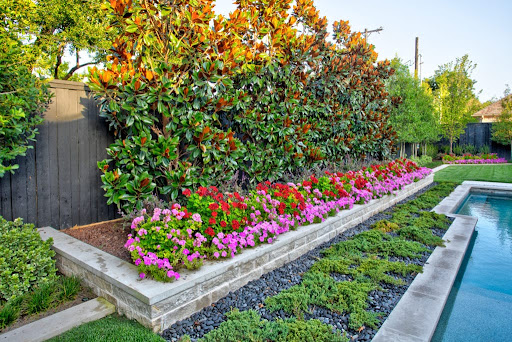
Native plants work beautifully in both natural and modern landscapes. Clean layouts and structured planting elevate their appearance.
Design integration includes:
- Defined planting beds
- Layered heights
- Repetition for cohesion
Native doesn’t mean unstructured.
Avoiding Common Native Planting Mistakes
Native plants still require planning. Poor spacing or random placement can reduce visual impact.
Proper planning ensures:
- Balanced growth
- Clean layout
- Long-term success
Design makes the difference.
Why Professional Native Plant Planning Matters
Not all native plants work well together. Professional planning ensures the right species are placed in the right locations.
Expert planning:
- Prevents overcrowding
- Improves visual balance
- Maximizes performance
Native planting works best with intentional design.


.svg)