
.svg)

.svg)

Why Your Landscape Feels Incomplete (and How to Fix It)
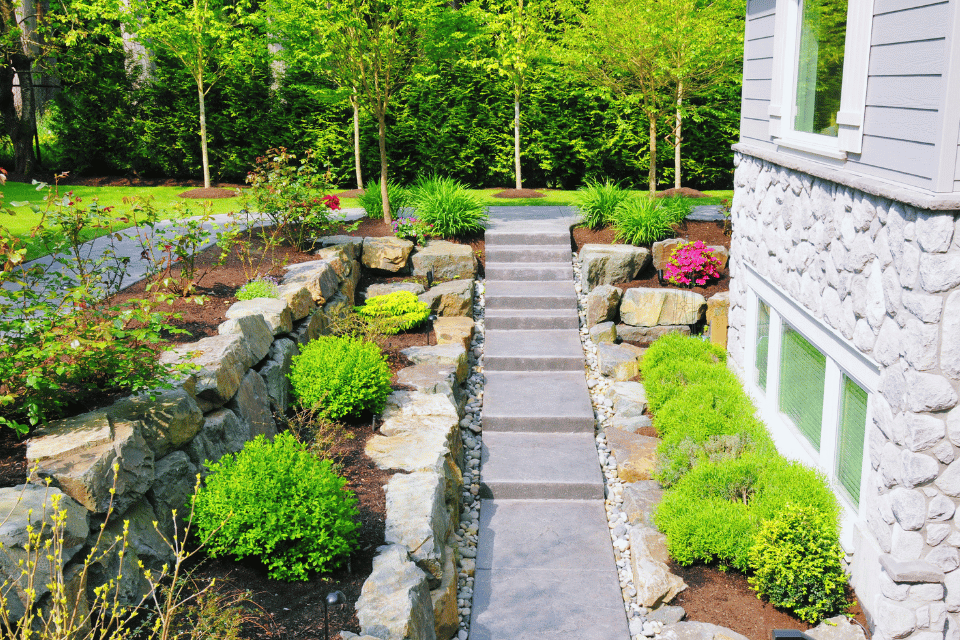
Many homeowners invest in landscaping but still feel like something is missing. If you’ve ever looked at your yard and thought it felt unfinished, you’re not alone. Searches for why a landscape feels incomplete usually come from homeowners who have plants, features, or hardscaping—but lack cohesion.
An incomplete landscape isn’t about missing features—it’s about missing connection.
Lack of a Clear Design Plan
One of the biggest reasons landscapes feel incomplete is the absence of an overall plan. Adding features over time without a master layout often leads to disjointed results.
Without a plan:
- Spaces don’t flow together
- Materials feel mismatched
- Features feel randomly placed
Design creates structure and direction.
Too Many Isolated Features
Landscapes often feel unfinished when features exist independently instead of working together. A patio here, planting there, and a walkway somewhere else can feel disconnected.
Integrated design:
- Creates flow
- Improves usability
- Enhances visual balance
Connection is what makes a space feel complete.
Missing Transitions Between Areas
Transitions guide movement and create harmony. Without them, spaces feel abrupt or awkward.
Effective transitions include:
- Walkways
- Defined edges
- Layered planting
Transitions make spaces feel intentional.
Unbalanced Layout or Proportion
Scale issues are hard to notice at first but become obvious over time. Features that are too large or too small disrupt balance.
Balanced design:
- Improves comfort
- Enhances aesthetics
- Supports usability
Proportion brings harmony.
Overplanting or Underplanting
Planting plays a huge role in how finished a landscape feels. Too many plants can feel chaotic, while too few feel bare.
Proper planting:
- Creates structure
- Adds depth
- Enhances flow
Planting should support design—not overwhelm it.
Lack of Defined Zones
Spaces feel unfinished when there’s no clear purpose. Defined zones help homeowners understand how to use the yard.
Zones may include:
- Seating areas
- Walkways
- Garden spaces
Purpose brings clarity.
Ignoring Hardscape Foundations
Hardscaping often anchors the landscape. Without it, planting can feel temporary or unstructured.
Hardscaping provides:
- Stability
- Visual structure
- Functional use
Foundations make landscapes feel permanent.
Missing Vertical Elements
Flat landscapes often feel incomplete. Vertical elements add dimension and visual interest.
Vertical features include:
- Pergolas
- Screens
- Trees
Height adds balance and depth.
Inconsistent Materials and Finishes
Using too many materials without cohesion can make a landscape feel disorganized.
Consistency improves:
- Visual flow
- Clean appearance
- Design clarity
Repeating materials unifies the space.
Why Professional Design Solves the “Unfinished” Feeling
Professional design identifies what’s missing—not by adding more, but by improving connection and balance.
Expert design:
- Creates cohesion
- Enhances flow
- Maximizes existing features
Completion comes from integration.


.svg)