
.svg)

.svg)

Why Your Landscape Looks Flat (and How to Add Depth and Dimension)
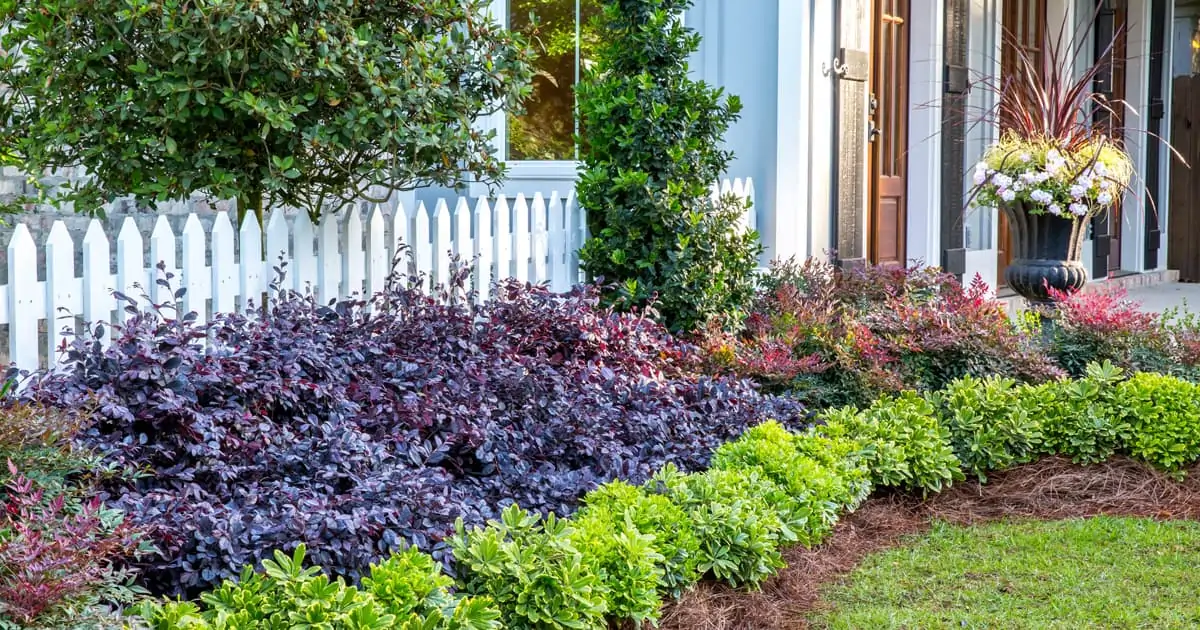
Some landscapes look clean—but still feel uninspiring. If your yard feels one-dimensional, you’re not alone. Homeowners searching for how to add depth to your landscape are usually dealing with spaces that look flat, empty, or lacking visual interest. The issue isn’t always what’s there—it’s how everything is arranged.
Depth is what turns a basic yard into a dynamic, engaging space.
Why Landscapes Feel Flat
Flat landscapes lack variation in height, spacing, and visual layering.
Common causes include:
- Everything at the same height
- Large uninterrupted lawn areas
- Minimal contrast between elements
Without variation, the eye has nowhere to travel.
The Role of Layering in Landscape Design
Layering is one of the most effective ways to create depth.
Good layering includes:
- Tall elements in the background
- Medium-height plants in the middle
- Low ground cover in the foreground
Layers guide the eye naturally.
Why Plant Height Variety Matters
Using plants of similar size creates a uniform look.
Height variation:
- Adds dimension
- Creates visual hierarchy
- Prevents monotony
Mixing heights creates interest without clutter.
Using Elevation Changes for Impact
Even small changes in elevation can transform a space.
Elevation can be introduced through:
- Raised planting beds
- Retaining walls
- Steps and terraces
Vertical movement adds depth instantly.
Breaking Up Large Open Areas
Big open spaces often feel empty rather than expansive.
Solutions include:
- Dividing space into zones
- Adding focal features
- Incorporating planting islands
Structure makes space feel intentional.
Creating Focal Points to Anchor the Design
Flat landscapes often lack a visual anchor.
A focal point:
- Draws attention
- Creates direction
- Adds purpose
Without it, everything feels equally unimportant.
Why Contrast Is Essential
Depth comes from contrast—not just quantity.
Contrast can be created with:
- Light vs dark colors
- Smooth vs textured surfaces
- Hardscape vs softscape
Contrast helps elements stand out.
Using Walkways to Add Movement
Paths don’t just guide feet—they guide the eye.
Curved or directional walkways:
- Create visual flow
- Lead through the space
- Break up flat layouts
Movement adds dimension.
Vertical Elements Change Everything
Flat yards lack height variation.
Vertical features include:
- Pergolas
- Trellises
- Trees and tall structures
Height creates balance.
Why Repetition Still Matters
Depth doesn’t mean randomness.
Repeating elements:
- Creates rhythm
- Maintains cohesion
- Prevents visual chaos
Structure and variation must work together.
Lighting Adds Depth at Night
A flat yard during the day becomes even flatter at night without lighting.
Layered lighting:
- Highlights different heights
- Creates shadows
- Adds depth after sunset
Lighting extends dimension into nighttime.
Avoiding Overdesign While Adding Depth
Too many elements can overwhelm the space.
Adding depth should:
- Enhance clarity
- Maintain balance
- Avoid clutter
Less—but better placed—always wins.
Why Professional Design Makes Depth Feel Natural
Professionals understand how to balance layers, height, and flow.
Expert design:
- Adds dimension without clutter
- Creates natural transitions
- Improves both form and function
Depth is intentional—not accidental.


.svg)