
.svg)

.svg)
Why Your Plants Keep Dying (Even When You’re Taking Care of Them)
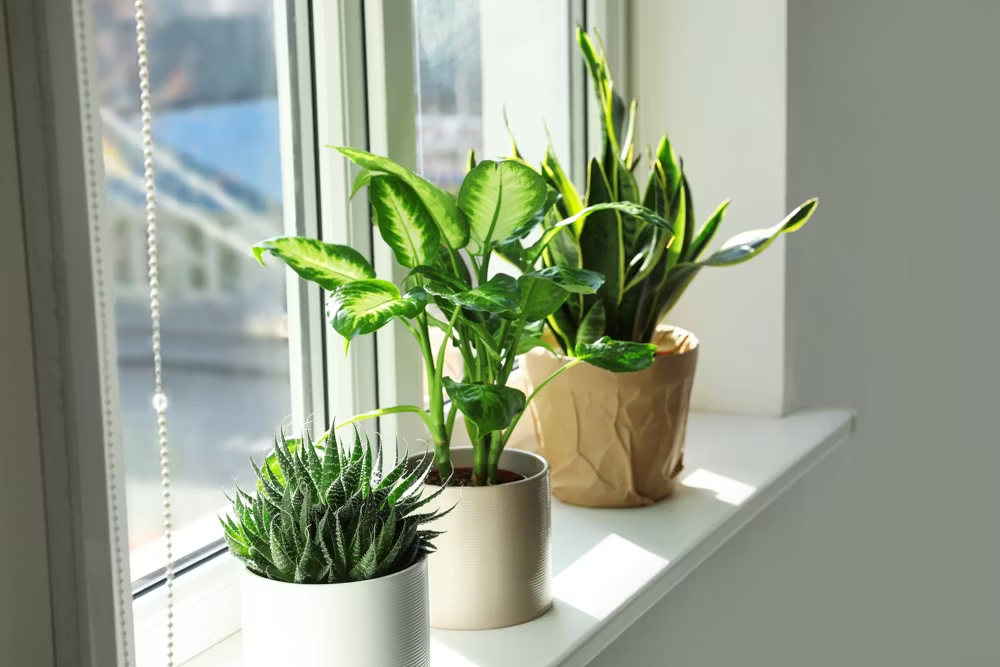
Few things are more frustrating than investing in plants, watering them consistently, and still watching them decline. Homeowners searching for why plants keep dying in your yard are usually doing their best—but still not seeing results. The truth is, plant failure is rarely about effort. It’s usually about conditions.
Plants don’t fail randomly—they fail predictably.
Why Care Alone Doesn’t Guarantee Plant Success
Watering, trimming, and fertilizing only go so far.
Plants depend on:
- Proper placement
- Soil conditions
- Drainage
- Sun exposure
If those are wrong, care won’t fix it.
The “Right Plant, Wrong Place” Problem
One of the most common causes of plant failure is poor placement.
Even healthy plants struggle when:
- Sun-loving plants are placed in shade
- Shade plants are exposed to full sun
- Wind exposure is ignored
Matching plants to conditions is critical.
Soil Issues Are Often the Hidden Cause
Soil problems are easy to overlook—but hard for plants to survive.
Poor soil leads to:
- Weak root development
- Nutrient imbalance
- Poor water absorption
Healthy soil supports healthy plants.
Overwatering Is More Common Than Underwatering
Many homeowners unknowingly harm plants by watering too much.
Overwatering causes:
- Root rot
- Oxygen loss in the soil
- Increased disease
More water doesn’t mean healthier plants.
Drainage Problems Can Kill Plants Quickly
Water that doesn’t drain properly suffocates roots.
Signs of drainage issues include:
- Constantly wet soil
- Wilting despite watering
- Yellowing leaves
Roots need air as much as water.
Plant Spacing Affects Long-Term Health
Plants that are too close compete for resources.
Crowded planting leads to:
- Poor airflow
- Increased disease
- Stunted growth
Spacing matters more than initial appearance.
Sun and Heat Exposure Changes Over Time
Plants may start strong, then decline as seasons change.
This happens when:
- Sun angles shift
- Heat intensifies
- Shade patterns evolve
Initial success doesn’t guarantee long-term performance.
Irrigation May Not Match Plant Needs
Even with a system in place, watering may not be correct.
Common issues include:
- Inconsistent coverage
- Same watering schedule for all plants
- Poor timing
Watering should match plant type and environment.
Plant Quality Matters—But Only to a Point
Healthy plants give a good start—but can’t overcome bad conditions.
Even high-quality plants:
- Fail in poor soil
- Struggle with improper placement
- Decline with bad drainage
Environment always wins.
Seasonal Stress Can Trigger Decline
Extreme heat, cold, or storms can weaken plants quickly.
Stress factors include:
- Drought conditions
- Sudden temperature changes
- Wind exposure
Resilient design helps plants recover.
Replacing Plants Without Fixing the Cause
Many homeowners repeat the same cycle.
Replacing plants without solving the issue leads to:
- Continued failure
- Increased cost
- Frustration
The root problem must be addressed.
Why Plant Success Starts With Design
Planting isn’t random—it’s strategic.
Good design:
- Matches plants to conditions
- Plans spacing and growth
- Aligns irrigation and soil
Design prevents repeat failure.
Why Professional Planning Leads to Healthier Landscapes
Professionals identify underlying issues before planting.
Expert planning:
- Reduces plant loss
- Improves long-term performance
- Saves money over time
Healthy landscapes are built—not guessed.


.svg)